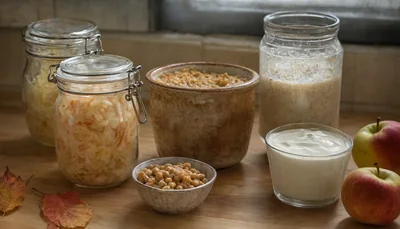

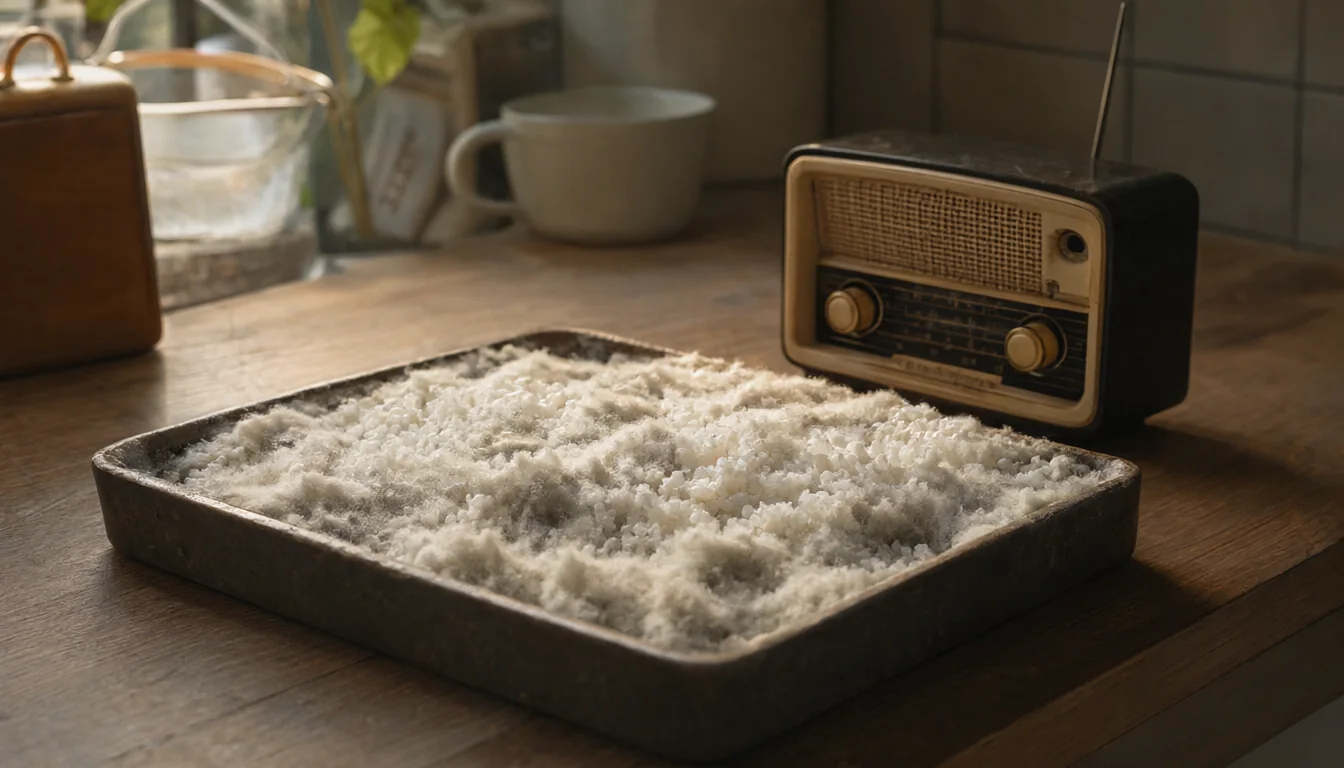

Listened: “Koji: The Mold You Want In Your Kitchen,” a Science Friday radio segment from May 15, 2020. The guests were Rich Shih, a mechanical engineer who builds exhibits at the Museum of Food and Drink in New York, and Jeremy Umansky, co-chef and co-owner of Larder, a delicatessen in Cleveland. About twenty minutes. I put it on while the shio koji from May 11 went into a marinade.
The host opened with the point that virtually every listener already has koji in the house, because there is soy sauce in the cupboard and “soy sauce cannot be made without this mold.”
What I did not know before the segment. There is more than one koji. The guests talked about Aspergillus oryzae, the one in my spore packet, and also about Aspergillus luchuensis, which “produces citric acid as it grows” and, in their description, makes rice taste like sour candy. Different strains make a different mix of enzymes, and the mix is what you taste. The mold “uses enzymes to break starches, fats, and proteins down,” and which enzymes depends on which mold.
It does not have to be rice. One of them listed what else koji will grow on: wheat berries, rye, hominy. And the setup is what I used in May, “a warm space with a little bit of humidity,” the same conditions as proofing bread.
The smell. Umansky described the finished koji as green apple, champagne, honeysuckle, mango and pineapple. Mine smelled like chestnuts at 24 hours and sweet at 48. I will pay more attention next time.


The miso recipe in the segment is shorter than the one I use: hydrate the koji with a little water, open a can of beans, mix in the koji and some salt. That is it.
My notes. This is the first time since April that I have heard someone say the word enzyme out loud about food I make, instead of reading it in a paper about a capsule. The segment treats the enzymes as the point of the mold and the mold as the way to get them, which is what I wrote down on May 11 without knowing anyone agreed.
Still open: whether koji grown on rye makes a different enzyme mix from koji grown on rice, or the same enzymes on a different grain. The segment says the flavor changes. It does not say why.