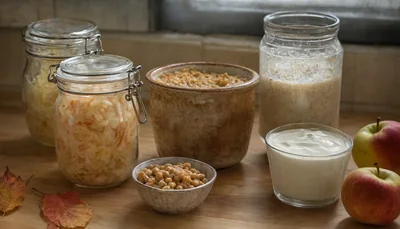


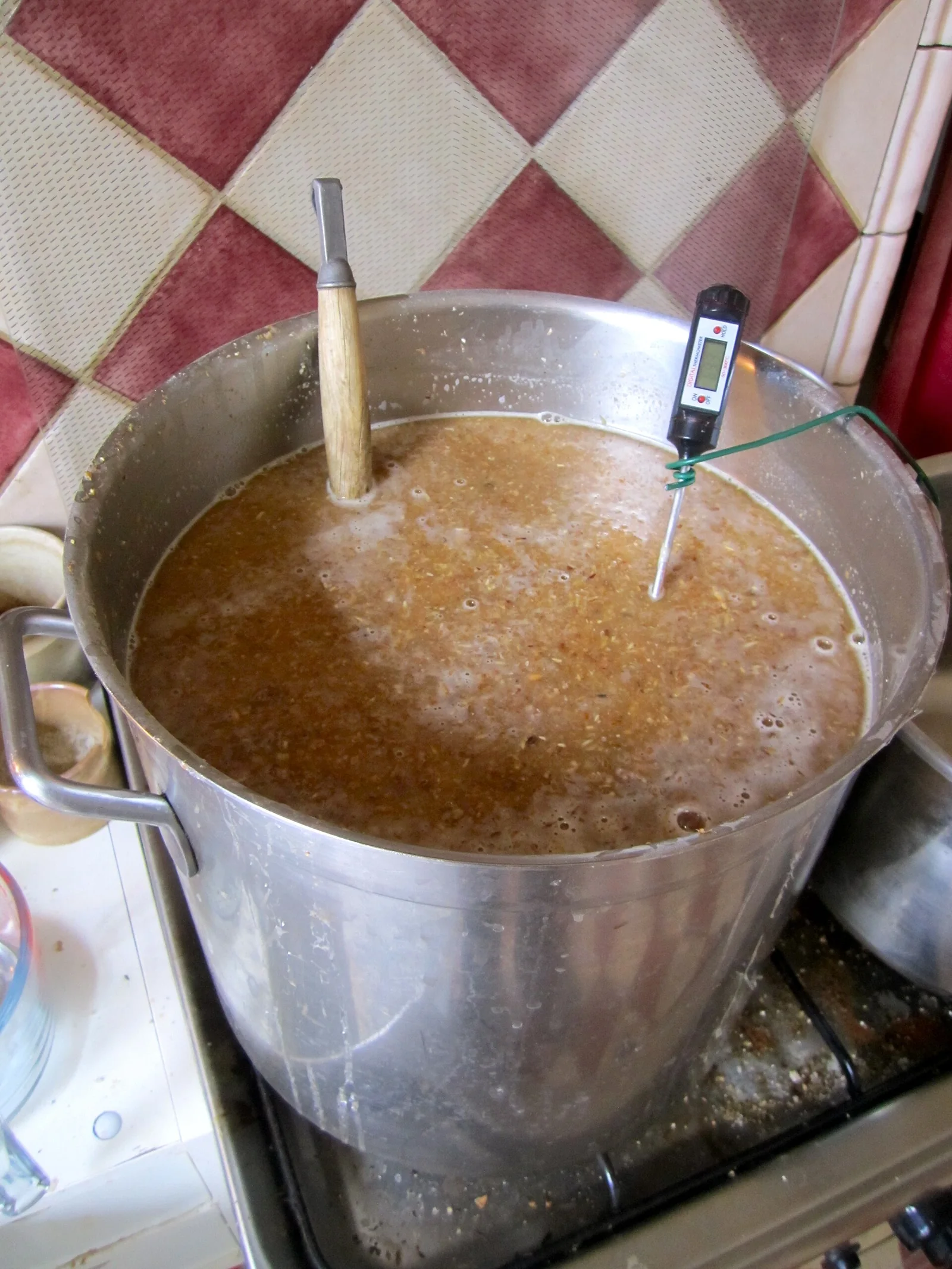
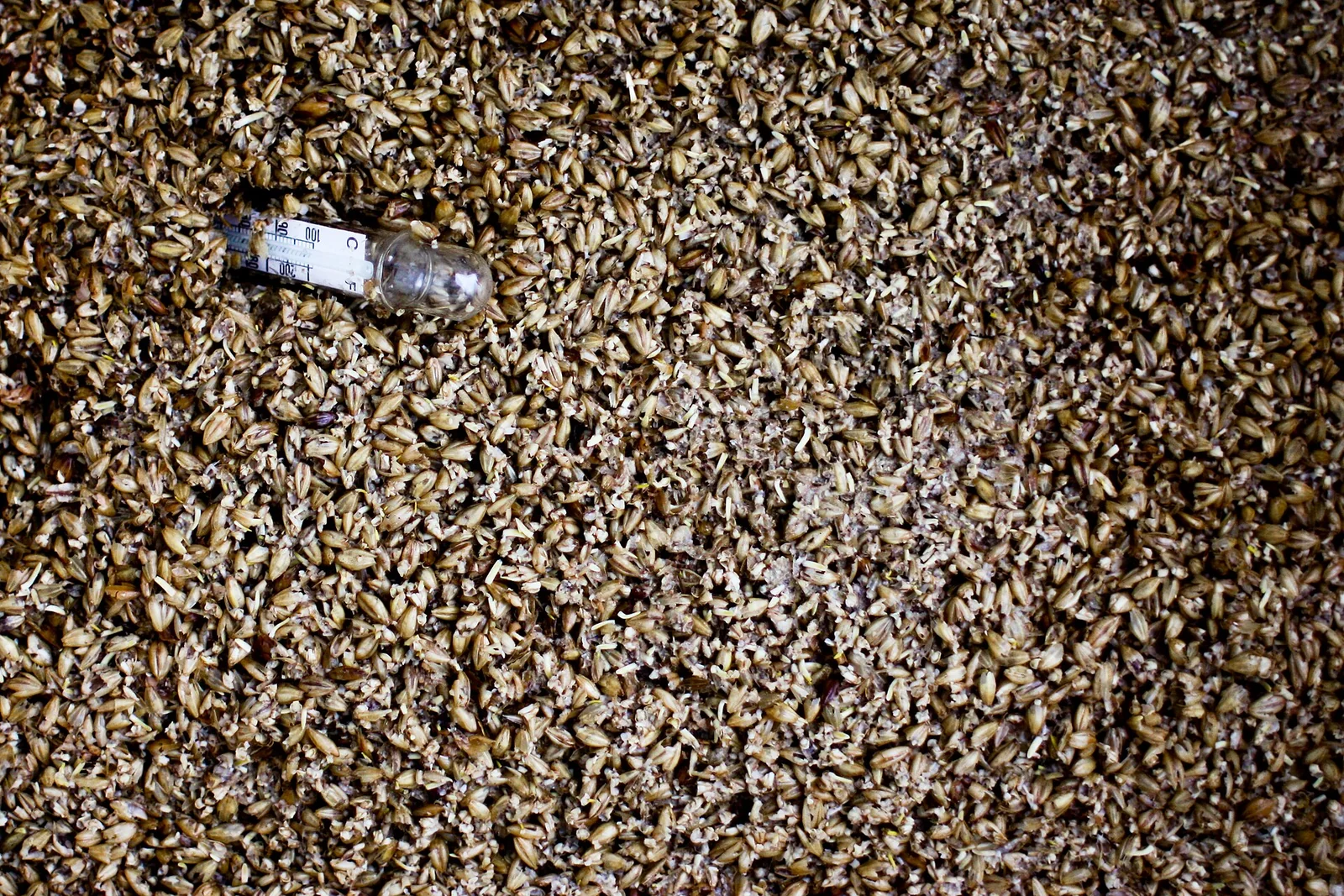
I brew beer at home, and the step I keep getting wrong is the mash: crushed malted barley soaked in hot water for an hour so the enzymes in the grain can turn its starch into sugar. This month I made two small batches from the same bag of malt, same water, same yeast, and changed only the mash temperature. One was held at 148 F for the hour. The other was held at 156 F. Both finished fermenting this week.
The 148 F beer is thin and dry. The 156 F beer has more body and finishes sweeter. I expected some difference. I did not expect this much from eight degrees.
Went looking for why. The Brew Your Own article by Steve Parkes was the clearest thing I found. Two enzymes in the malt break starch into sugar. Beta-amylase works at the ends of the starch chains and makes maltose, the sugar yeast eats best. It “is active between 131 and 149 °F.” Alpha-amylase cuts the chains in the middle, works higher, about 145 to 158 F, and leaves pieces the yeast cannot use.
The line I copied into the notebook: beta-amylase “is also being denatured” as it gets near 149 F, and above that it is mostly gone within five minutes.
So at 148 F the beta had a full hour to make small sugars, and the beer came out dry. At 156 F the beta was dead early, the alpha left bigger pieces, and the beer kept its body. The American Homebrewers Association page says the same from the other direction: hotter mashes “preserve residual sugars that contribute to mouthfeel and body.”
What I wrote at the bottom of the page: an enzyme has a temperature it stops working at, and it does not come back. I did not know that before this week.
Still open: how fast does beta-amylase die at 152, halfway between my two batches? Nobody gives a number for the middle.
About this blog. I ferment things at home and have for about twenty years. Every time one came out wrong, the reason turned out to be an enzyme, so I started keeping notes on enzymes. The notes were getting scattered, so they go here now. This is a record for myself: dates, numbers, what I read, and what I still do not know. If you know more than I do about something here, I would like to hear it.