

First cheese attempt in two years and it did not set. Milk, starter culture, rennet (the enzyme that makes milk set), forty minutes, and I still had a pot of warm milk. I had let the milk get to 118 F before the rennet went in, because I was not watching the pot.
The rennet guide at cheesemaking.com gives the range in one sentence: “Rennet begins working between 85°F and 105°F (and dies off around 140°F).” I was 13 degrees above the top of the working range. Not dead yet by their number, but the guide also says the enzyme slows and weakens as it gets warmer, and I had the milk sitting there a while before I noticed.
What rennet is, from the same page: “an enzyme blend that transforms ordinary milk into delicious cheese.” Animal rennet is about 80 percent chymosin and 20 percent pepsin. Chymosin clips a piece off the outside of the casein particles in milk, and once that piece is gone the particles stick together into a gel. That gel is the curd.
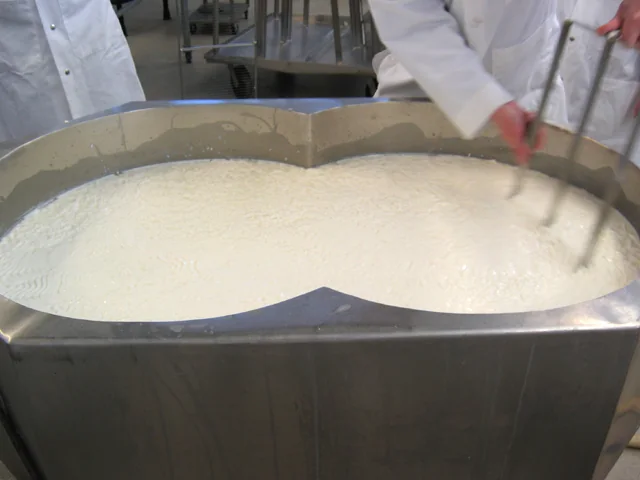
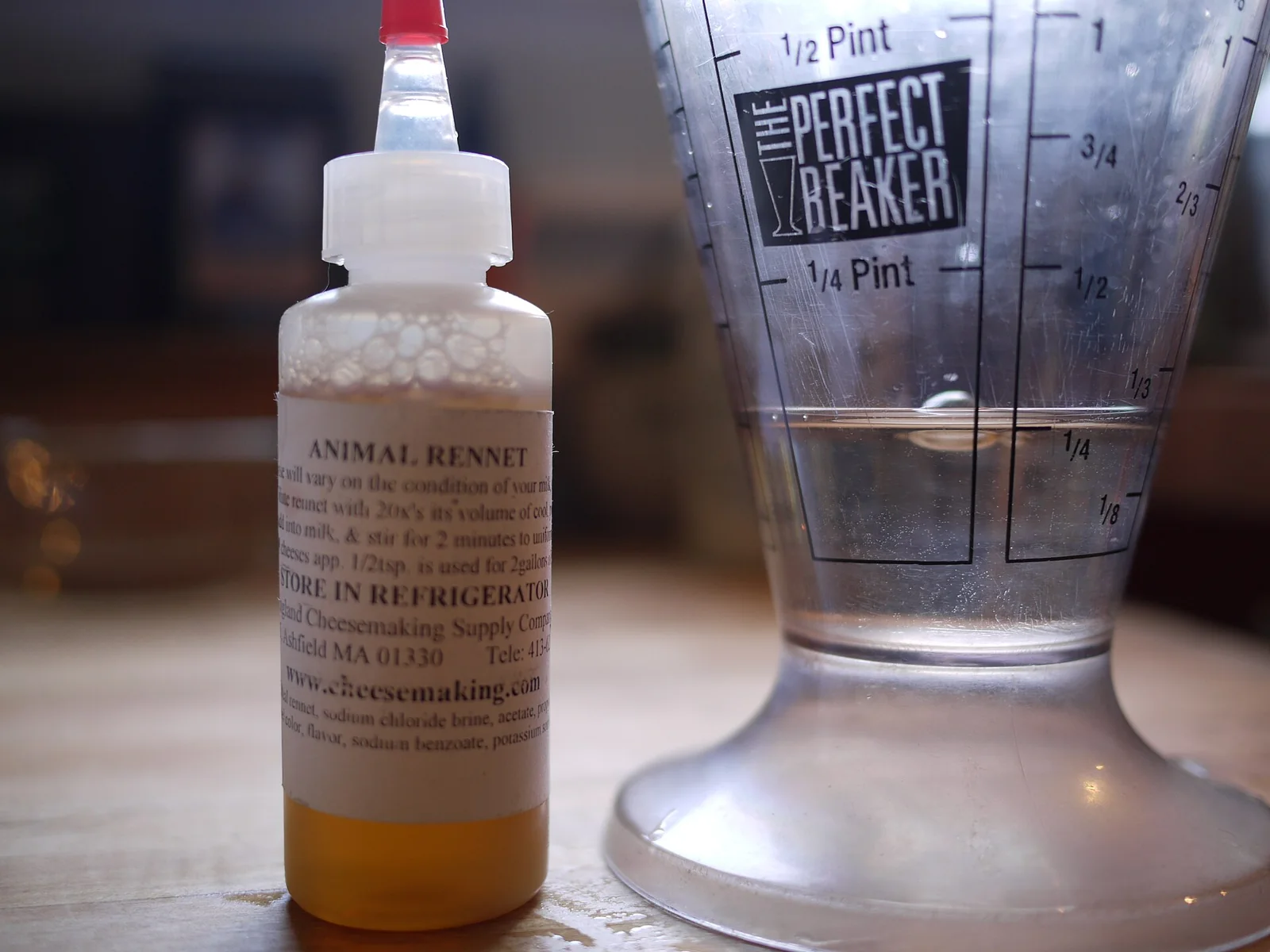



Second thing I learned from the troubleshooting list on that page. For weak curd, the advice is: wait longer, add calcium chloride, or add more rennet “because the bottle has lost potency.” So two of my problems may have stacked: milk too hot and rennet too old.
Retry this weekend with a new bottle and the milk at 90 F.
Still open: how much potency a bottle loses per year in the fridge. The guide says it drops but gives no number.