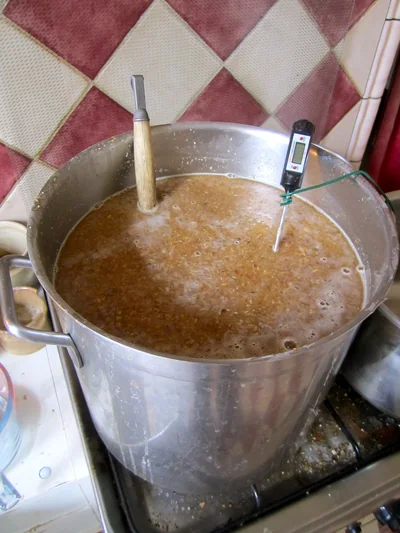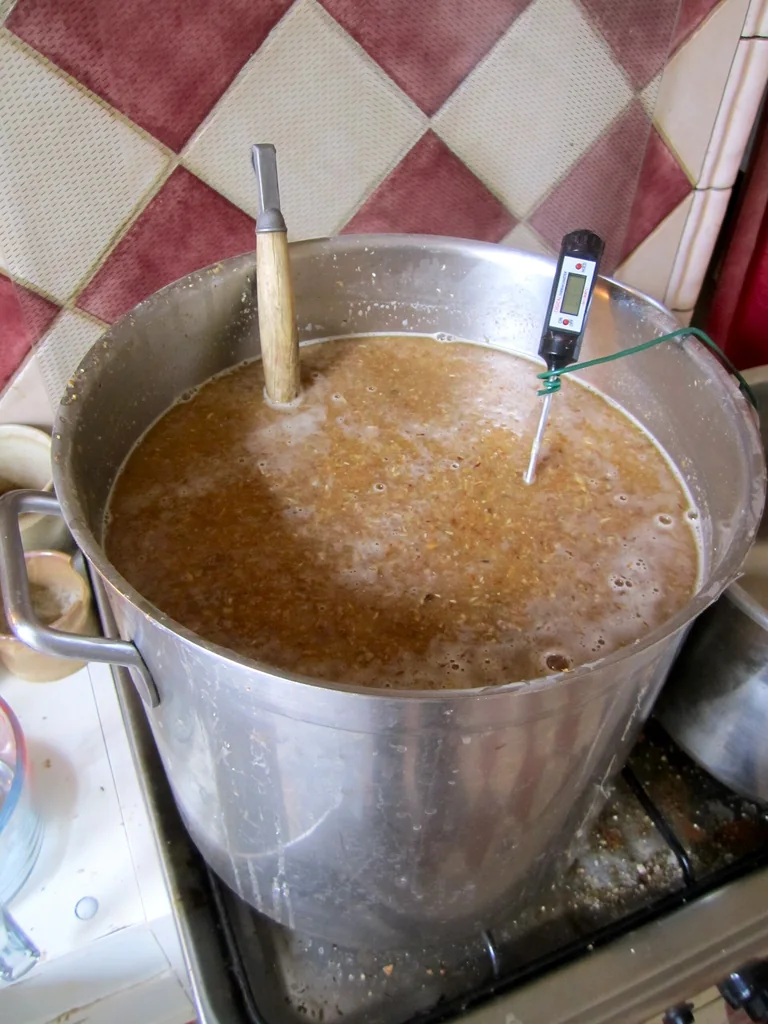




Another beer this week. I wanted a way to know when the enzymes in the mash (the hot soak of malted barley that turns starch into sugar) are finished, instead of guessing by the clock. The BeerSmith blog has the iodine test in four steps, so I tried it.
The steps, as written there: “Draw a small sample of wort from the top of your mash tun” (wort is the sweet liquid in the mash), put it on a white plate, let it cool, “add a few drops of iodine to the wort.” Then look. “If there are unconverted starches in the wort it will quickly turn dark blue or black.” If the enzymes are done, the drop stays “either clear or a slight shade of brown.”
At 40 minutes my drop went black. At 60 minutes it was still a little blue at the edge. At 75 minutes it stayed brown. So my usual 60-minute mash was stopping early, at least with this grain and this water.
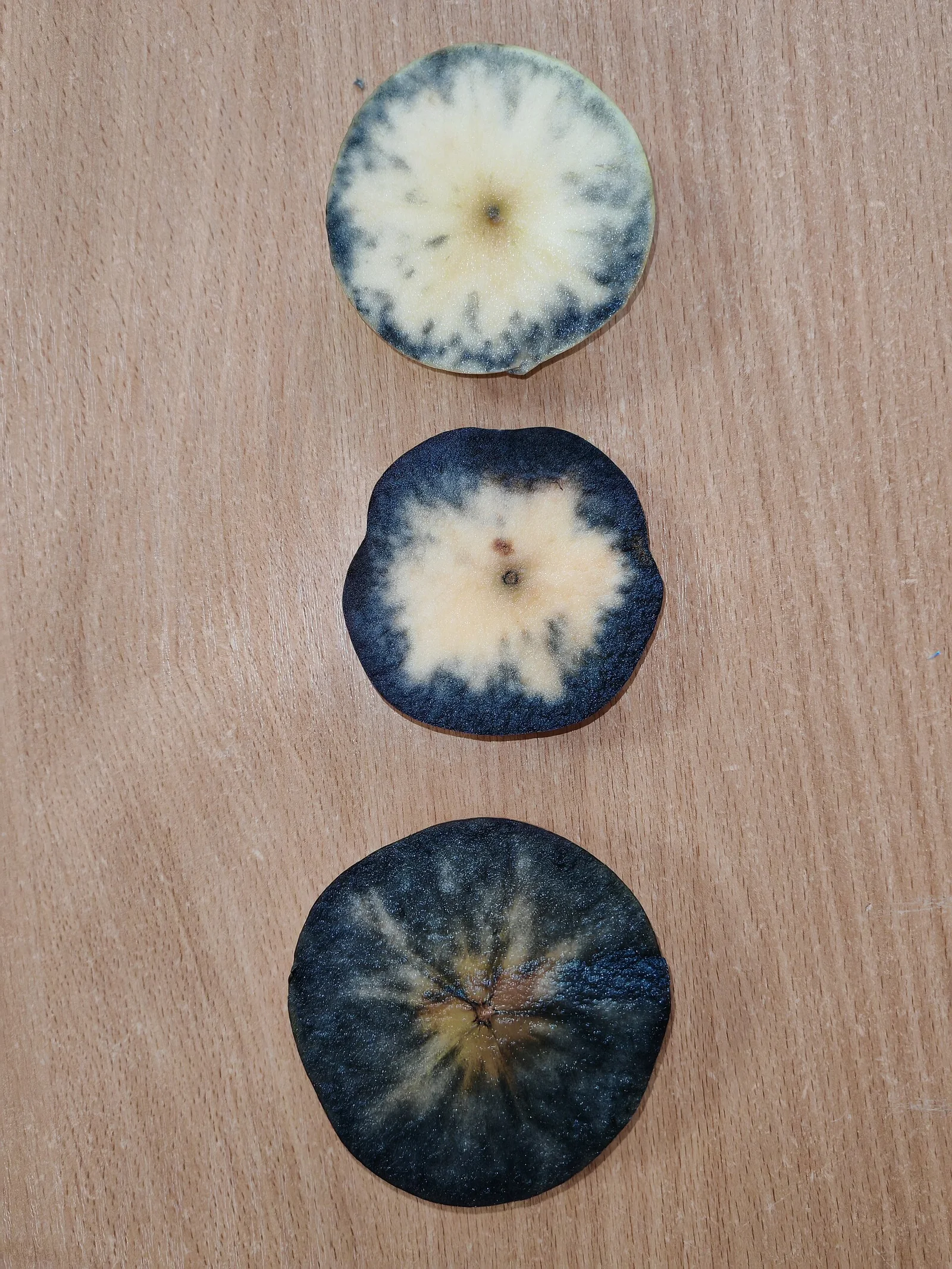



How it works, from what I could find: iodine slides into the coiled shape of starch and that complex is dark. Once amylase has cut the starch into sugars there are no coils left, so no color.
I like this test because it does not measure the enzyme. It measures what is left of the enzyme’s work. That is something I can see.
Still open: whether the test is sensitive enough to catch the last few percent of starch, or whether brown just means “mostly done.”