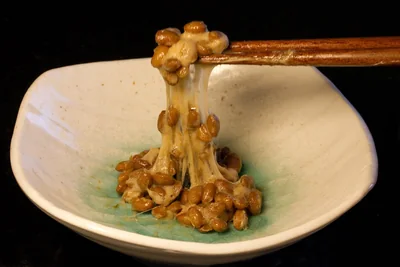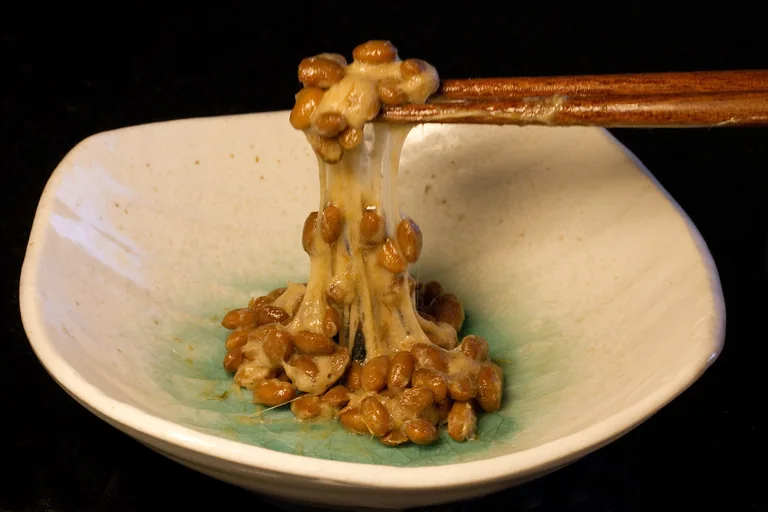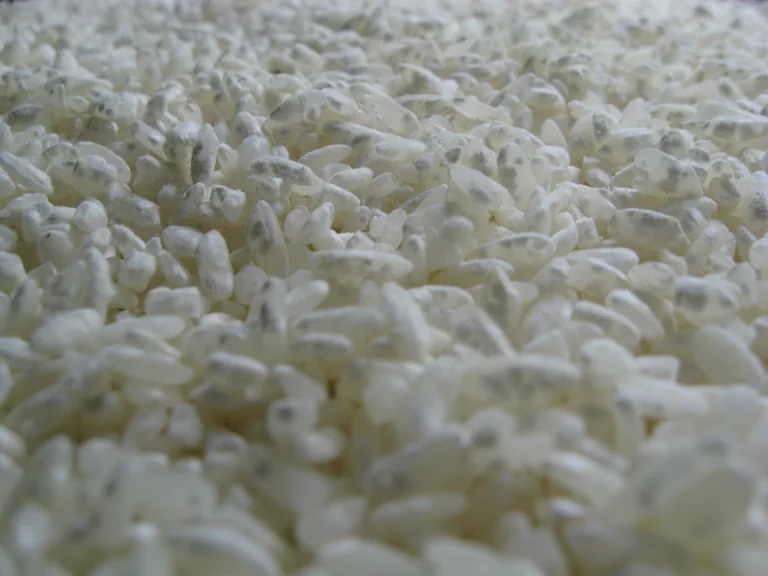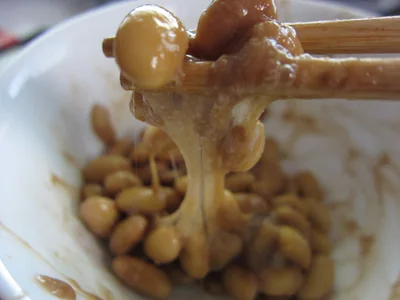



Three natto batches in, I wanted to know what the enzyme in natto is. The one everyone names is nattokinase. Found a 2022 review in Biomolecules, “Biotechnology, Bioengineering and Applications of Bacillus Nattokinase,” by Li Yuan and three co-authors. Most of it is about producing the enzyme in factories. Two lines went into the notebook.
On pH: “Nattokinase could be stable in the pH range of 6.0 to 12.0, and rapidly inactivated below pH 5.”
On temperature: “The best enzymatic activity of nattokinase can be obtained in the range of 40 to 65 °C.” It also “showed strong stability under a low-temperature environment,” keeping over 95 percent of its activity after five freeze-thaw cycles. Good to know for the freezer.


The pH line is the one I kept reading. Stomach acid is well below pH 5. So by the paper’s own numbers, nattokinase eaten in natto meets the one place that inactivates it first. Whatever natto does for people, the paper does not say it is intact nattokinase walking through the stomach. Supplement versions apparently handle this with coatings, or do not. The paper is not about that and I have not read a label yet.
The other new thing: the unit. Activity is given in FU, fibrinolytic units, with numbers like “39.28 FU/g.” It is not the U I see for amylase, and not the IU on vitamin bottles. Each enzyme gets measured against its own target in its own test. I did not know that. It means a label with two enzymes in two units is not being careless. There may be no shared unit to use.
Still open: what a coated nattokinase supplement looks like on a label, and whether the coating is listed.