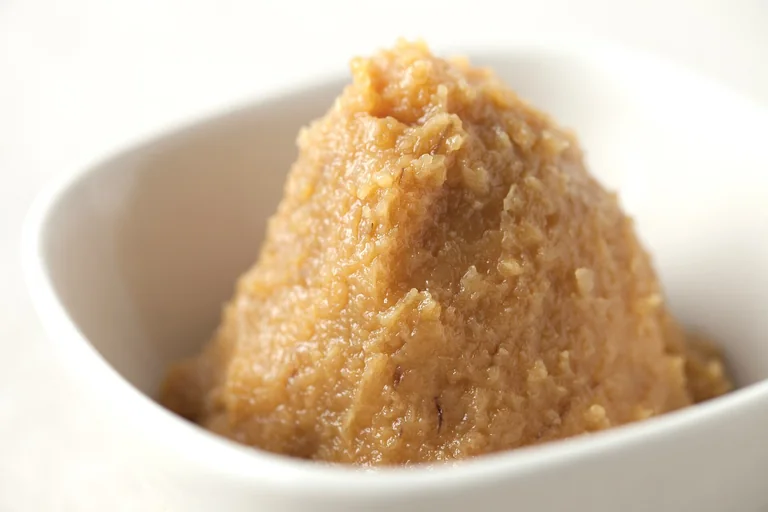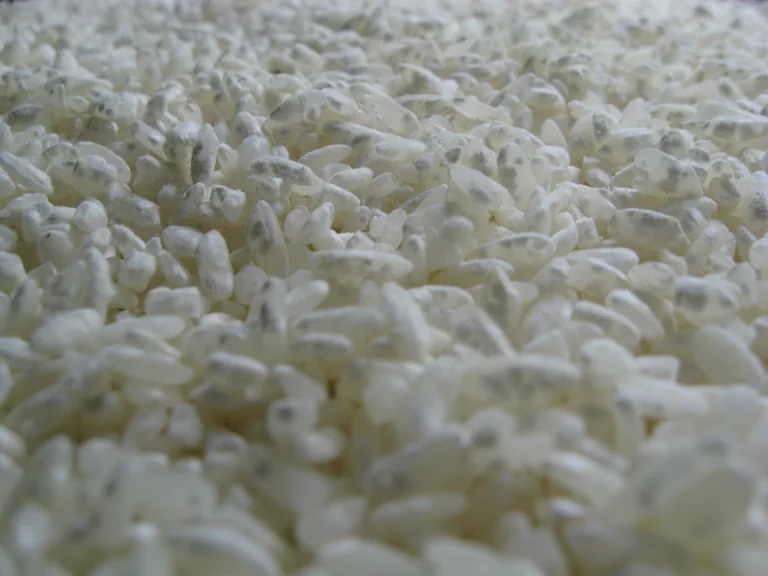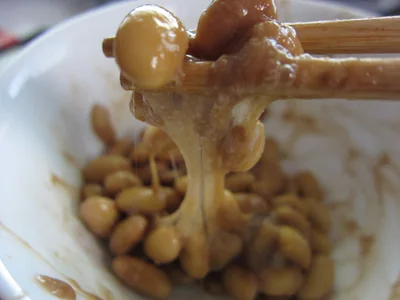




Natto, first batch of the year. Natto is cooked soybeans fermented with a bacterium until they turn sticky and pull strings. Followed the Revolution Fermentation guide. The step that always bothered me: “While the beans are still very hot (around 80°C), add the water inoculated with the culture.” After a month of watching heat kill amylase, rennet and bromelain, pouring a culture onto beans at 80 C looked wrong.
It worked. Beans in the cooler with the heat mat, “between 37 and 45°C,” for 20 hours. The guide says “between 12 and 24 hours.” This morning the beans were “wrapped in a silky, delicately stringy substance,” which is what the guide promised, and after stirring with chopsticks the strings pulled.
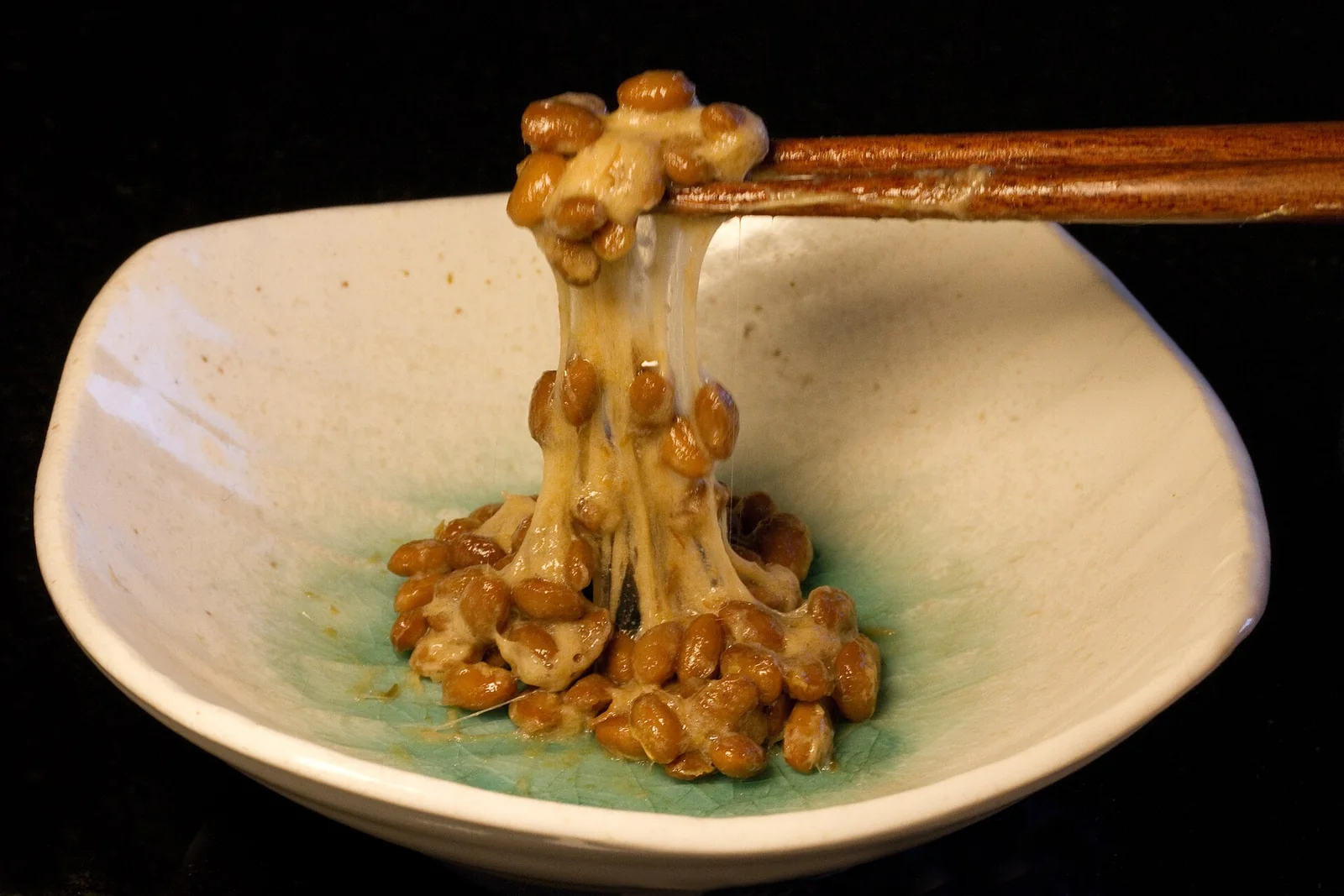
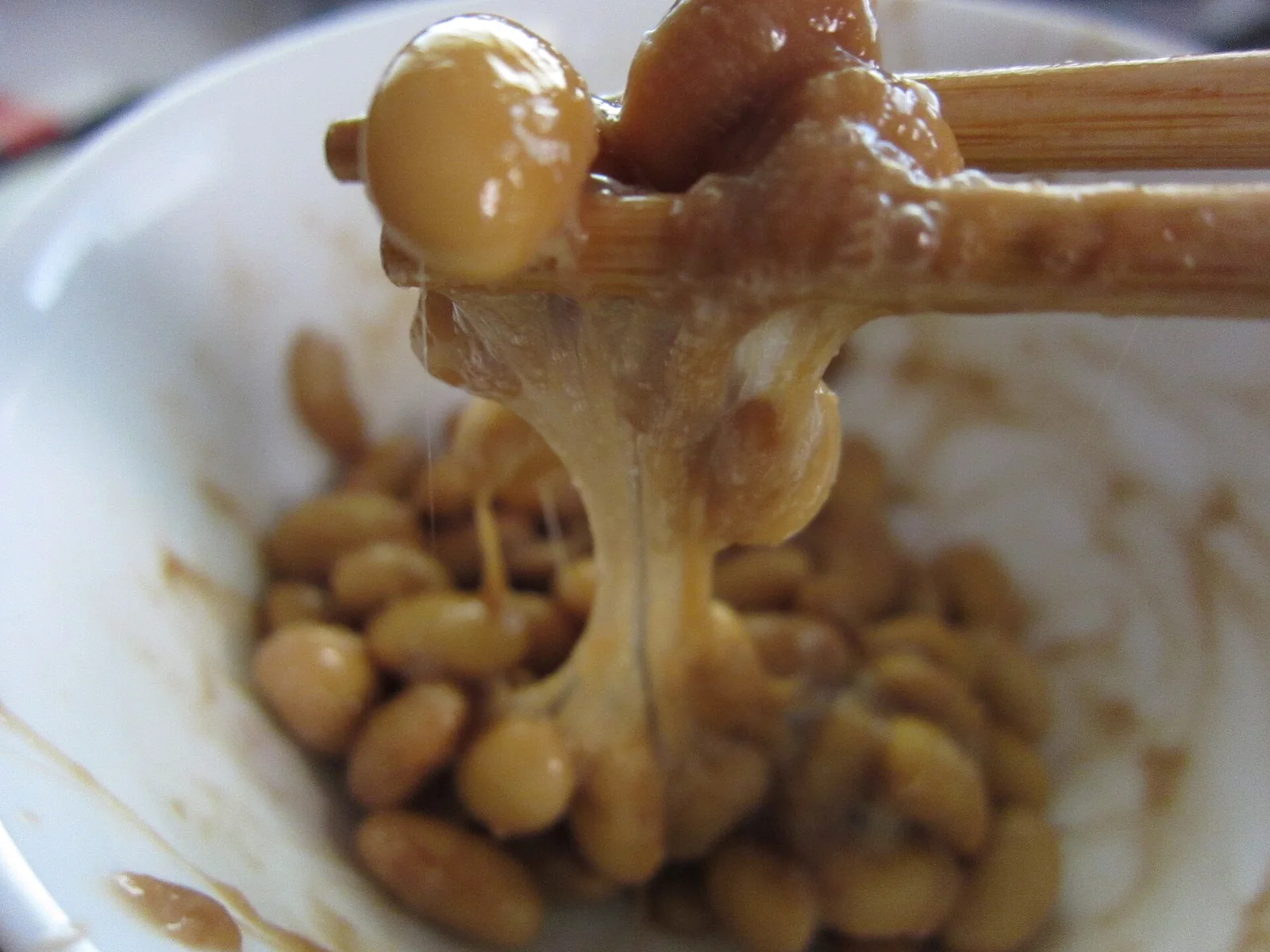
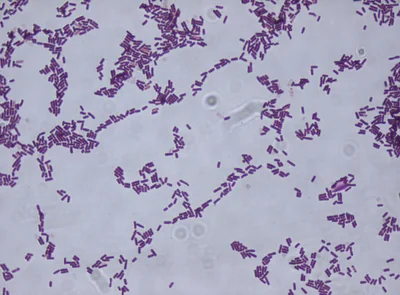
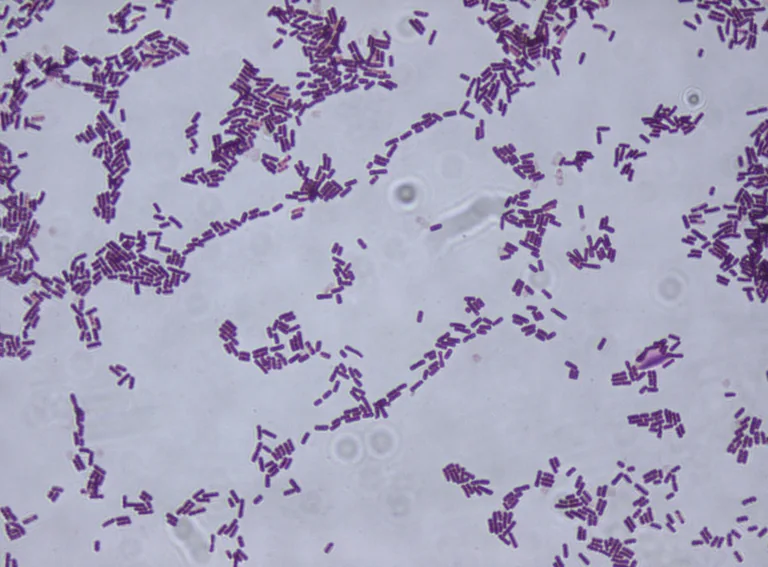
Why 80 C does not kill it, from what I read this week. The starter powder is not live bacteria the way a sourdough starter is. It is spores of Bacillus subtilis, a resting form with a tough coat. Spores take a temperature that kills most other things in the pot. So the hot pour clears out competitors, and when the beans cool into the 37 to 45 range, the spores wake up with the beans to themselves.



What I wrote down, because it took me a while to see it: the thing that survives 80 C is the organism in its spore form. Not an enzyme. The enzymes that make natto what it is get made later, after the spores wake up, and those enzymes are as heat-sensitive as the ones in my mash.
So “survives heat” needs a second question: survives as what?
Still open: at what temperature the spores themselves die. The guide does not say, and I do not want to find out with a batch.