



Short version: one answer says the date is when the extra enzyme packed in at manufacture decays down to the label claim. The other says most supplement dates are best-by dates about quality, not expiry dates about safety. Both can be true on different bottles.
Read: a Quora question on what the expiration date on an enzyme supplement is based on, with two answers two days apart that disagree.
NovaPrism, September 13: “The expiration date on an enzyme supplement doesn’t measure spoilage. It marks the exact month a deliberately overpacked pill finally decays down to 100% of its promised potency.” The mechanism is overage, which means packing in more enzyme than the label says on purpose. Enzymes unfold slowly with heat, moisture and time, losing activity without rotting. A manufacturer measures how fast a given enzyme loses activity in a sealed bottle, and if a lactase will lose a quarter over two years, they pack 125 percent on day one. The date is where the decay curve meets the label claim.
Stijn Hommes, September 15, a researcher with a lab background, pushed back. An expiration date “is determined based on microbiological safety of the products,” and most supplements do not carry one at all. They carry a best-by date, which is about quality. “Don’t assume a date is an expiry date unless it actually says it is one.” And no date means anything if the bottle was stored badly.

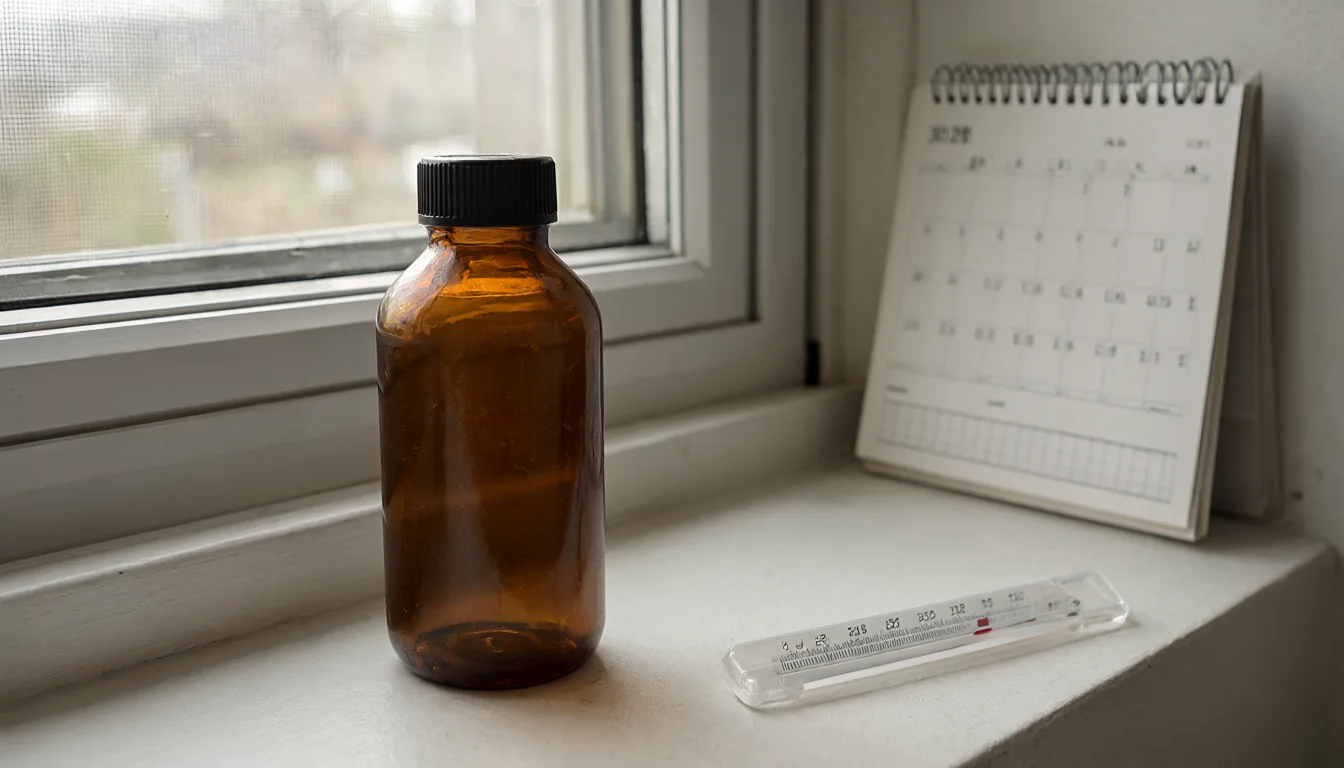
My notes. I read the two as being about different words on different bottles, with neither one wrong. What I do now: find the activity unit on the label, assume it was measured at manufacture, and treat the date as the manufacturer’s estimate of how long the overage lasts under good storage. And keep the bottle out of the bathroom, which the April rennet taught me before any Quora answer did.
Still open: whether any SOD label says which kind of date it carries.